

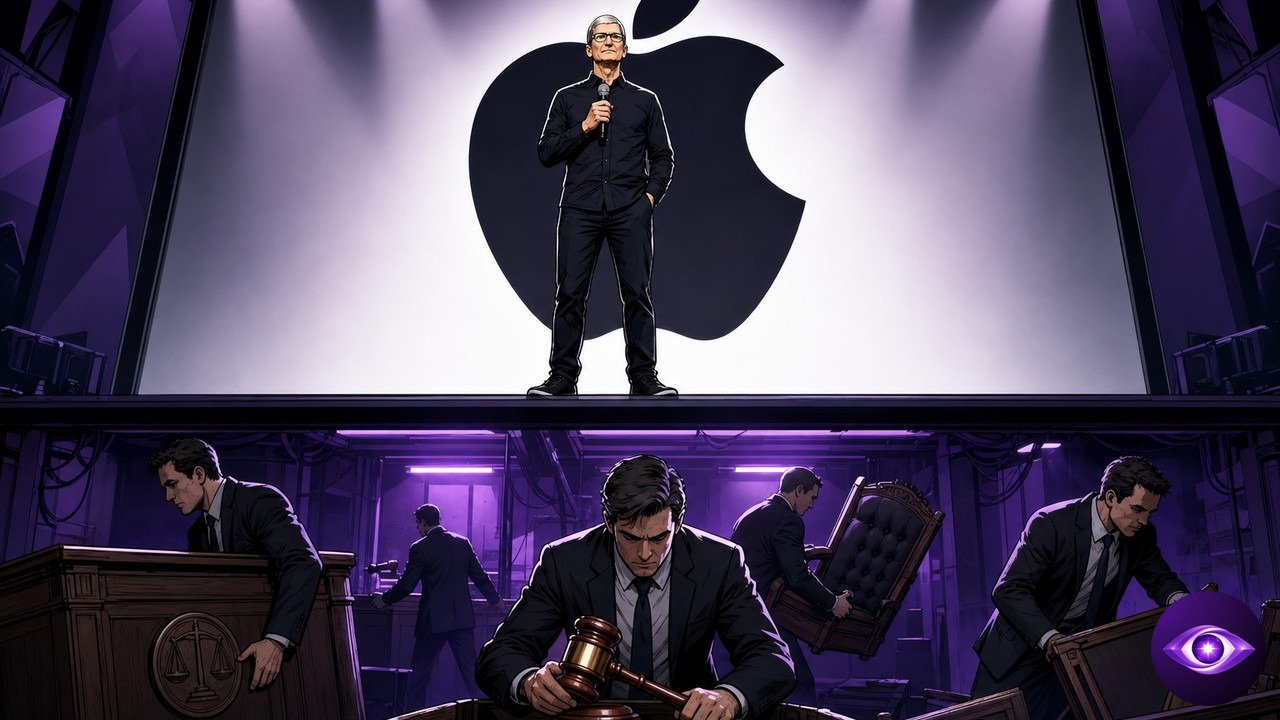
Apple settlement: the company paid $250 million in May 2026 to close the false-advertising case on Apple Intelligence and Siri. The settlement explains precisely why WWDC 2026 served more credible demos and a wider hardware perimeter.
Key Takeaways
- $250 million settlement signed in May 2026 without admission of wrongdoing
- Apple accepts the payment to close the file before WWDC 2026
- WWDC 2026 delivered sober demos and a wider device compatibility
How the case started: a broken Apple Intelligence promise
The Apple settlement closes a case built on the communication around Apple Intelligence. The company positioned in 2024 that Apple Intelligence and a revamped Siri would be available on iPhone 15 Pro and any device equipped with an M1 chip or better.
The promise did not hold. Apple acknowledged in March 2025 that the rollout would take longer than expected. The wording used at the time talked about additional delay before feature delivery. That sequence fueled the class action over false advertising.
The Apple settlement was signed in May 2026 without admission of wrongdoing. The fixed amount sits at $250 million, an envelope calibrated to clear the litigation without crossing the threshold that would set precedent for affected buyers.
The timing is not neutral. It lands less than a month before WWDC 2026, exactly when Apple rolled out its new Siri AI sequence and the Apple Intelligence repositioning. Clearing the case unblocks the product roadmap.
For shareholders, the Apple settlement passes as a contained exceptional charge. At the scale of a multi-hundred-billion cash pile, the direct impact on earnings stays marginal. The real story sits elsewhere.

What the Apple settlement changed at WWDC 2026
The settlement leaves a direct, readable mark on this year’s keynote. Apple dropped the heavily post-produced clips in favor of live-like pre-taped demos, showing a user actually running features on a real device.
The hardware perimeter widened compared to the original promise. AI features are now available on iPhone 15 Pro and Pro Max, all iPhone 16 models and later. That includes iPad, Mac, Apple Watch, and Vision Pro. The framing of the announcement avoids the hardware-selectivity trap.
The communication shift is sharp. The company now leans on a product narrative anchored on filmed usage rather than scripted sketches. Visual credibility is back at the center, designed to neutralize any regulatory backlash.
As we covered in our story on opening iMessage to Poke, Apple has been recalibrating its marketing language around AI agents since spring. The Apple settlement reinforces that discipline by forcing a verifiable demo format.
For regulators, the Apple settlement creates a de facto standard for AI presentations. Competitors Google, Microsoft, and Samsung will watch the format Apple adopts and recalibrate their own AI keynotes accordingly over the next six months.
Also on Horizon:
- Meta Hatch: a $200 AI agent built to do your work
- Chat is dead: meet the new ChatGPT agent app
- OpenAI rolls out Lockdown Mode against prompt injection
Why $250 million changes little and a lot at the same time
On a financial reading, the Apple settlement remains a second-order event. The company generates the amount in a few days of ordinary operations. No expected impact on guidance, no impact on buybacks for the fiscal year.
On a reputational reading, the weight shifts. The Apple settlement implicitly acknowledges that the 2024 communication on Apple Intelligence crossed a line. The firm denies fault but accepts the cost. Internal discipline around AI marketing is going to tighten.
In the short term, the operational consequence already shows in WWDC materials. Apple legal teams secured stronger sign-off rights over the demo format. The cost is invisible to users, readable to analysts tracking the product-announcement cadence.
In the medium term, over three to six months, the topic becomes the validation process around keynotes. If Apple holds the live-like demo standard, competitors will have to prove they are not overselling their assistants. The market will converge on a more sober presentation grammar.
The other expected effect plays out on consumer protection. The associations that drove the original action now hold a monetizable precedent against any manufacturer promising AI features without firm timelines. Pressure becomes systemic.
The Apple settlement is not a fine. It is an out-of-court settlement. But the de facto regulatory effect is just as powerful, because it immediately reshapes how the industry films and presents artificial intelligence.
Follow the story on Horizon.