

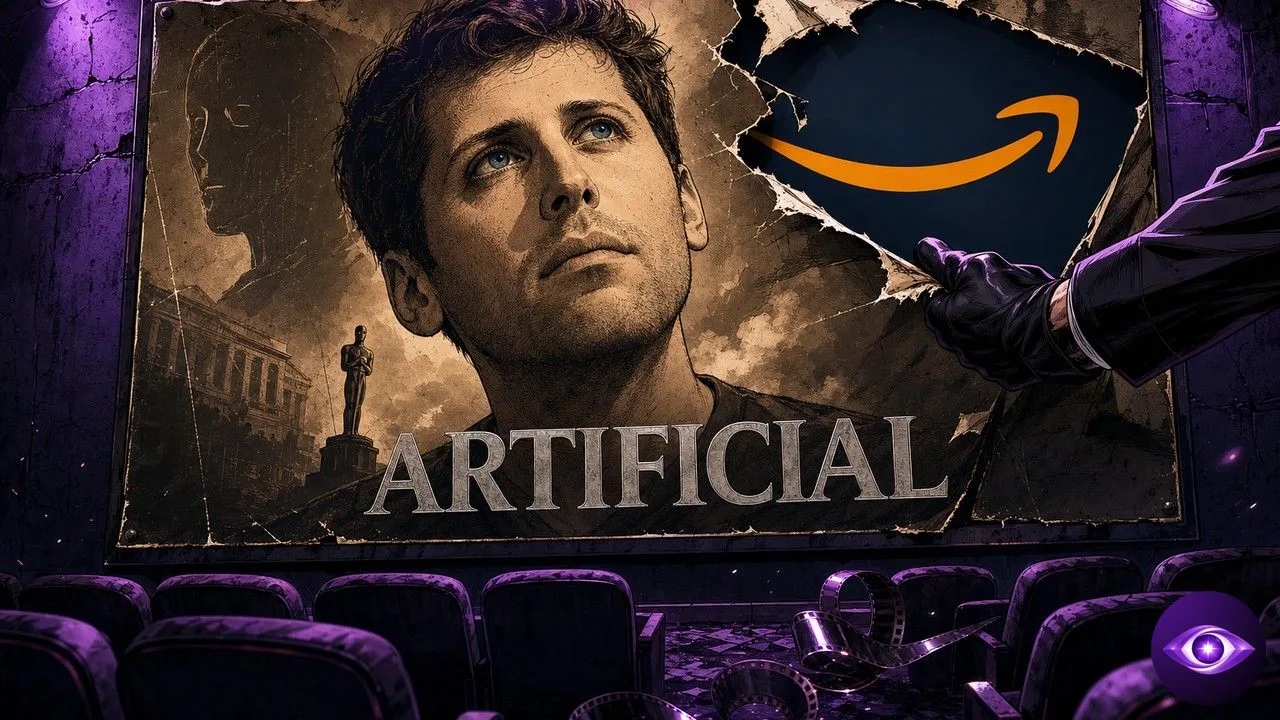
Amazon MGM Studios has dropped Artificial, a nearly finished feature about Sam Altman’s brief firing from OpenAI in late 2023. Andrew Garfield was set to play Altman, with Luca Guadagnino directing. The studio says the film would fit better elsewhere and is now shopping it around. The call lands four months after Amazon signed a 50 billion dollar partnership with OpenAI.
Key Takeaways
- Amazon MGM Studios shelves the Artificial film just as post-production wrapped.
- Andrew Garfield was cast as Sam Altman, with Guadagnino directing a story built on the November 2023 board coup.
- The decision lands after Amazon’s 50 billion dollar OpenAI deal and Bezos’s known personal ties with Altman.
Have an AI Sum Up This Article
ChatGPTA finished cut, then a shelf
The Artificial film centered on the densest week in OpenAI’s recent history. In November 2023, the board pushed Sam Altman out on a Friday night. Five days later he walked back in, stronger than before, after a staff revolt and Microsoft’s open backing. That arc made obvious material for a feature. For context, see our earlier piece on Horizon: Sam Altman Says Researchers Held the Whole Field Back.
Amazon MGM Studios had handed the project to Luca Guadagnino, the filmmaker behind Challengers and Call Me By Your Name. Andrew Garfield, twice an Oscar nominee, was set to play Sam Altman. The studio carried the picture all the way through final editing before pulling the plug.
An Amazon spokesperson said the studio holds “great respect” for Guadagnino and believes the Artificial film would fit better at another studio. No further public reason was offered. The production is now hunting for a buyer, with no guarantee any major studio will step into a project this exposed.
What troubles observers is the timing. Four months earlier, Amazon announced a 50 billion dollar agreement with OpenAI for compute capacity. The read becomes blunt: you sign with the hero, you stop airing his rough edges. Jeff Bezos has also kept a personal relationship with Altman for years, which makes the editorial call inside Amazon even harder to read at arm’s length.

Who wins, who loses
The immediate winner is OpenAI. The cinema story most likely to dent its founder’s image just left the agenda. With its IPO closing in, that is a major narrative relief. The 34 billion dollar burn rate disclosed before the listing is already enough to occupy analysts; a critical biopic would have stacked a reputational layer on top.
The immediate loser is Luca Guadagnino. The director just wrapped a prestige feature with no distributor, and the commercial window narrows as the real events age. Andrew Garfield also loses an awards-season role that critics had penciled in for the next cycle.
The invisible loser is the public. The November 2023 ouster remains the decade’s most telling event for understanding how AI labs govern themselves. A mainstream film would have moved that story outside the tech bubble. Instead, it stays locked inside books and podcasts.
Short term, the decision pokes at the line between a commercial deal and a studio’s editorial freedom. Amazon MGM Studios did not say “no” to a film critical of OpenAI; it said “not here.” The nuance is thin and it will feed the debate across Hollywood, where cloud and AI infrastructure contracts now carry a growing share of production budgets.
Medium term, the industry will watch whether another buyer surfaces. If no major studio steps in, the message is plain: producing a film critical of OpenAI now means alienating a potential compute supplier. That growing cross-dependence between Hollywood and the hyperscalers is new, and it will shape the creative pipeline of the coming years.
Also on Horizon:
- China cuts 12,000 university degrees made obsolete by AI
- 79% of parents already use AI to raise their kids
- GPT-5.5 Instant beats doctors on health answers
What the shelving says about hyperscaler power
The Artificial episode does not sit alone. It belongs to a decade of structural alignment between streaming platforms and frontier AI labs. Amazon, Microsoft, Google. The three biggest buyers of content are also the three biggest infrastructure providers for OpenAI, Anthropic and the rest. The same company hosts the model and bankrolls the script.
The 50 billion dollar Amazon-OpenAI deal is not an isolated case either. Microsoft has carried more than 13 billion into OpenAI since 2023. Google committed 40 billion to Anthropic in cash and compute. Every dollar locked into AI creates implicit tension over editorial calls inside a sister studio or news room.
This concentration is already on regulators’ desks. The US FTC, the European Commission and UK authorities have opened probes into the structural ties between Microsoft and OpenAI. A shelved prestige feature on the back of a 50 billion dollar partnership will hand those files fresh ammunition, by giving a concrete example of commercial self-censorship risk.
For talent, the signal is heavy. A top filmmaker just learned that a studio can walk away after final cut if the subject bothers an industrial partner. Agents and producers will reread moral clauses and assignment clauses with that episode in mind. It sets a precedent inside the audiovisual value chain.
One unknown remains. If an independent studio or a foreign player picks the picture up, the Amazon decision will look like a one-off. If nobody steps in, then Amazon will have quietly validated an unwritten rule: in an economy where audiovisual production runs on AI cloud, you no longer film the bosses of that cloud at full freedom.
Follow the story on Horizon.



Pingback: Amazon Nara Wants to Orchestrate Hollywood AI Production - Horizon IA