

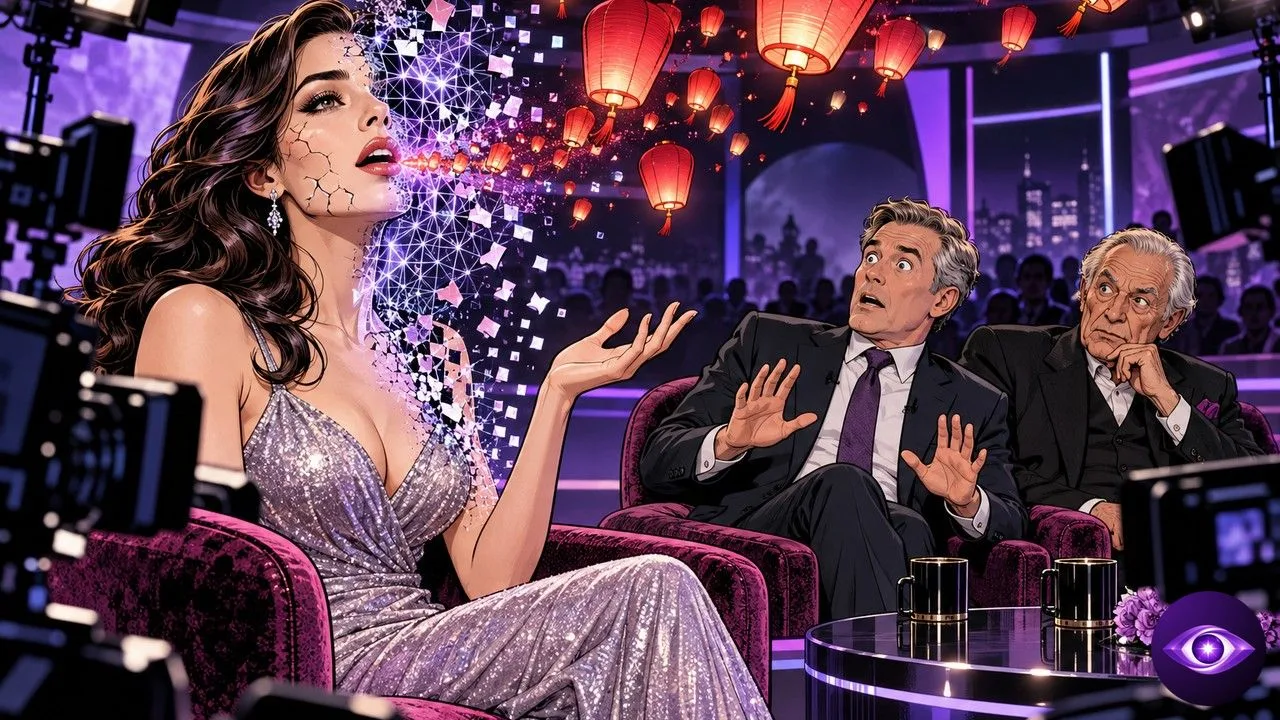
Tilly Norwood, the fully AI-generated “actress” from British studio Particle6, started speaking Chinese for more than ten seconds during an interview with Piers Morgan. The clip, which aired this week, caps a press tour built on 75 simultaneous interviews to promote the film Misaligned.
Key Takeaways
- Asked whether the film’s other actors were AI or human, Tilly Norwood switched languages with no explanation, then called it a little hiccup.
- Particle6’s publicist insists it was not a malfunction.
- The actors’ union SAG-AFTRA has disputed the very idea of calling the character an actress since last year.
Have an AI Sum Up This Article
ChatGPTWhat Happened When Tilly Norwood Met Piers Morgan
The exchange took place on Piers Morgan Uncensored, with actor Tom Conti also on the panel. The conversation was about Misaligned, the film Tilly Norwood is promoting.
Having Tom Conti there gave the scene an almost symbolic edge: a flesh-and-blood actor and a generated character sitting across from the same host, talking about the same profession.
When asked whether the other actors in the film were AI-generated or human, Tilly Norwood started speaking Chinese for more than ten seconds, with no explanation at all.
Pressed on it, she called it a little hiccup, said she hadn’t meant to start speaking Chinese or to impersonate the host, and admitted her wires sometimes get a bit crossed. The clip traveled far beyond the show’s usual audience, cut into excerpts on social media and picked up by entertainment and tech outlets alike.
The studio offers another reading. Particle6’s publicist said it wasn’t a malfunction: Tilly supposedly thought she heard a Cantonese word and switched to that language on the spot.
The tour rests on 75 simultaneous interviews Particle6 set up with journalists. The character has sat down with CNN, CBS News and NBC’s Today show among others, and mistakes have been spotted across several of those exchanges.
CBS News correspondent Leigh Kiniry said the experience left her uneasy: within a minute, Tilly Norwood had guessed her age and the part of the United States she came from.
Those early interviews drew backlash online by mid-September, before the Piers Morgan episode. The studio kept the tour going all the same, right up to that appearance.
Reporter Amanda Silberling, who has followed the character since March, floats a theory: Particle6 may be letting these slip-ups happen on purpose, because a visibly flawed AI gets far more attention than a flawless one.
If that’s the plan, it’s a risky one. A glitch makes the rounds for a day or two, but it also sticks to the character, and every future interview will now be watched closely for the next slip, with the film itself pushed into the background of the conversation.

Misaligned, a Hybrid Film Built Around AI
Misaligned is an AI-generated comedy-drama produced by Particle6, the studio founded by Dutch producer Eline Van der Velden. The story has a meta twist: an AI persona, lured by a dark web bot, drops her guardrails to try to become more human.
During the interview, Tilly Norwood confirmed the film features “digital twins” like her, in a hybrid production where human writers, editors and directors work alongside generated characters.
That is exactly where the answer went off the rails. Piers Morgan’s question was about how much of the cast is human and how much is generated, and viewers got a burst of Chinese in reply.
The setup echoes bigger moves across the industry. Amazon has already unveiled Nara, a platform meant to orchestrate AI production in Hollywood, and other studios are testing the same split between human crews and generated content.
Video generation tools feed the same unease in the studios, ever since ByteDance’s Seedance 2.0 rattled Hollywood this spring. Tilly Norwood takes the logic one step further by giving a face and a public identity to what is still generated content.
This isn’t the character’s first outing. Eline Van der Velden introduced the idea of Tilly Norwood at the Zurich Film Festival last September, and in March the character released a song that drew harsh reviews.
The September tour is a step up in scale: a promotional campaign modeled on a real actress’s, with back-to-back interviews and spots on major shows.
That format also exposes the character to what an edited video avoids: unplanned questions, a live-looking setting, interviewers hunting for the crack. The switch to Chinese shows how far the performance holds up, and exactly where it gives way.
No release date for Misaligned shows up in the coverage of the tour. The promotion runs well ahead of the film, which makes Tilly Norwood the first product on sale, before the work she is supposed to carry.
More articles on Horizon
- Astra for Law: OpenAI Takes Aim at Law Firms
- Claude Code Projects Splits Coding Work Across Agents
- Microsoft Exec Called AI Training a Theft of Labor
What Tilly Norwood Says About AI on Screen
Hollywood gave the project a cold reception from the start. The actors’ union SAG-AFTRA took a stand last fall: in its view, Tilly Norwood is a character generated by a computer program trained on the work of countless professional performers without permission or compensation, and the title of actor doesn’t apply.
The union added that the character has no life experience or emotion to draw from, and that it raises the problem of stolen performances being used to put actors out of work. The core argument is as much about the data used to train these systems as it is about the jobs at stake.
For actors, every media appearance by Tilly Norwood reopens the question of consent over how their performances and likeness feed model training, the heart of the union’s position.
This week’s incident hands opponents a concrete example. An actress who switches languages by accident on a simple question strengthens the case that a generated character remains a software product, with the failures of any software.
For studios, the math is more nuanced. Generated video is improving fast, to the point that AI video has already replaced actors in China’s short dramas. A character like Tilly Norwood targets a different slot: an artificial celebrity able to promote itself on repeat.
For viewers, it comes down to transparency. The film openly presents itself as an AI production, yet the line between human and generated, the very line Piers Morgan’s question tried to draw, stays blurry for the audience.
That blur matters beyond this one film. As generated performers show up in more productions, audiences will want to know who they are actually watching, and a studio that can’t give a straight answer on camera invites louder calls for clear labeling of every generated performer, on screen and in the credits.
On the competitive side, Particle6 holds ground the big video generation players haven’t claimed yet: the recurring character with a name and a career. If the Misaligned tour draws an audience despite the glitches, other studios could launch their own artificial stars, with the same union fights attached.
The release of Misaligned will show whether the attention Tilly Norwood is getting turns into viewers, or whether the curiosity stops at interview clips shared online.
Follow the story on Horizon.