

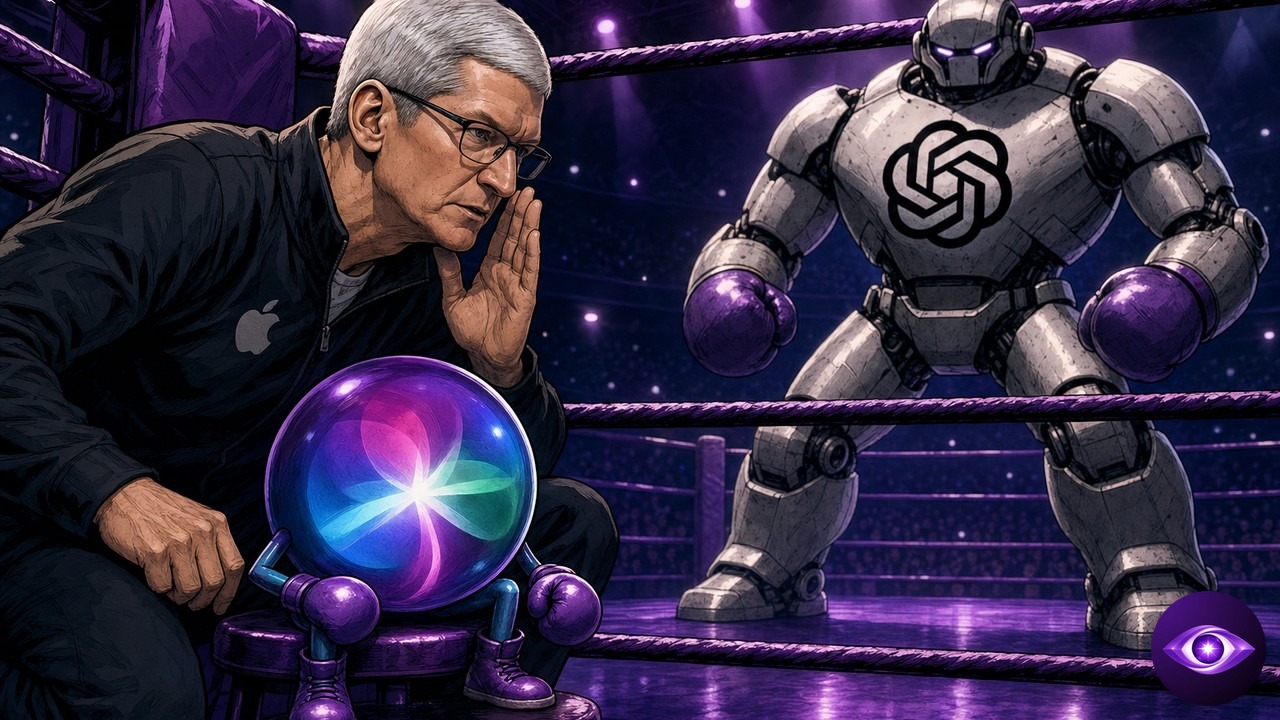
Apple is building the most ambitious overhaul of Siri since its launch. Screenshots from a preliminary iOS 27 build reveal a new standalone Siri app powered by Google’s Gemini, expected to be unveiled at WWDC in June. With 2.5 billion active devices, Apple Intelligence enters the AI assistant race with distribution advantages ChatGPT can’t match.
Key Takeaways
- Apple is building a dedicated Siri app capable of holding complex conversations and analyzing documents and photos.
- Apple Intelligence uses Google’s Gemini externally, combined with on-device models for privacy-sensitive tasks.
- 2.5 billion devices versus 900 million weekly ChatGPT users: Apple’s distribution edge is unprecedented.
Have an AI Sum Up This Article
ChatGPTA Siri App That Leaves the Dynamic Island and Enters the Conversation
Screenshots from a preliminary build of iOS 27 circulated this week, revealing a completely redesigned Siri interface. The assistant no longer lives only at the edge of the screen. A dedicated app gives it its own surface: conversation history, document and photo uploads, and text input as fluid as voice.
Access comes through two paths. The familiar voice trigger stays. A new entry point activates by swiping down from a rebuilt search bar now loaded with AI capabilities. Apple Intelligence slides into gestures users already have. The change is radical in scope, subtle in friction.
The new Siri can draft a message, check the weather, manage calendar events, launch apps, and search the web. These are tasks modern LLMs have handled for two years. What changes is that they’ll be available to 2.5 billion users without any additional download required. The overhaul reaches the voice itself, iOS 27 making Siri’s voice customizable.
WWDC in June 2026 is the moment of official announcement. Apple doesn’t comment on features in development, but leaks from sources close to the project carry a strong track record on Apple announcements. The developer community has been waiting for this moment since Apple declared Apple Intelligence a strategic priority last year. Everything converges on that event, the new Siri expected at WWDC.
As our coverage of iOS 27 rumors that Apple may let users pick their own AI model outlined, the AI assistant market is rapidly evolving toward systems capable of managing chained tasks without human supervision. Siri in iOS 27 fits squarely into that trajectory. For context, see our earlier piece on Horizon: iOS 27: Apple Plans to Let Users Pick Their Own AI Model.

2.5 Billion Devices Against ChatGPT’s 900 Million Weekly Users
Apple Intelligence rests on a hybrid architecture. Lightweight models run directly on device, protecting privacy and delivering speed on common tasks. For heavier requests, Apple routes through Google’s Gemini via the cloud. The partnership mirrors the logic of the Google Search deal on Safari: outsource what Apple doesn’t yet own, keep control of the interface.
The comparison with ChatGPT is striking. OpenAI claims 900 million weekly active users, an impressive number for a product requiring signup and intentional adoption. Apple Intelligence will arrive by default on 2.5 billion devices. Users don’t need to seek it out. It comes with the software update.
This distribution advantage is exactly what has been worrying OpenAI and Google since Apple first announced Apple Intelligence. A user who receives a capable, integrated assistant on their iPhone doesn’t necessarily need to open a separate app. Adoption friction is zero. Habit forms without conscious effort. Rivals are already pushing back, Meta blocking Apple Intelligence inside its apps.
The core question remains quality. Apple Intelligence must convince users who have already tried ChatGPT or Gemini. If responses are slower, less accurate, or less useful, distribution won’t retain anyone. Apple knows this. It’s likely why the Google partnership is acknowledged rather than hidden. Apple carries AI baggage too, having settled a false-advertising case over AI.
On the regulatory side, the Apple-Google partnership is already attracting attention. Both companies face separate antitrust scrutiny. A deeper collaboration in AI, following decades of search engine default agreements on Safari, won’t go unnoticed by European and US regulators.
Also on Horizon:
- Apple Intelligence iOS 27: Siri Goes After ChatGPT
- Anthropic Korea: Seoul Office Opens on Record Claude Usage
- ElevenLabs Music v2: Switching Genres Mid-Track
What WWDC in June Will Reveal About Apple Intelligence’s Real State
WWDC is the moment of truth. Apple presents each year the major features arriving in the fall. What’s at stake in June isn’t just the Siri iOS 27 announcement. It’s Apple’s credibility on generative AI after months of strategic positioning.
Expectations are high and pressure is higher. If the June demos show a fluid, contextual assistant capable of holding real conversations over personal documents, Apple reclaims the consumer AI narrative. If the demos disappoint or feel limited, the comparison with ChatGPT and Claude will be brutal. The rollout has moved on since, with the iOS 27 Siri public beta opening to every iPhone.
Medium term, the real question is whether Apple Intelligence will transform iPhone usage habits at a scale neither Google nor OpenAI can reach through their own distribution channels. If so, the AI assistant market will see significant rebalancing by end of 2026.
If not, Apple will have demonstrated that distribution alone cannot compensate for a technology gap. Either way, WWDC June 2026 will be one of the most-watched events in AI this year.
Follow the story on Horizon.



Pingback: iOS 27 Finally Lets You Reshape Siri's Voice - Horizon IA
Pingback: Poke, first AI agent on iMessage: $300M valuation - Horizon IA
Pingback: Vibe: Mistral Turns Le Chat Into a Full Work Agent - Horizon IA
Pingback: iOS 27: Apple Plans to Let Users Pick Their Own AI Model - Horizon IA