

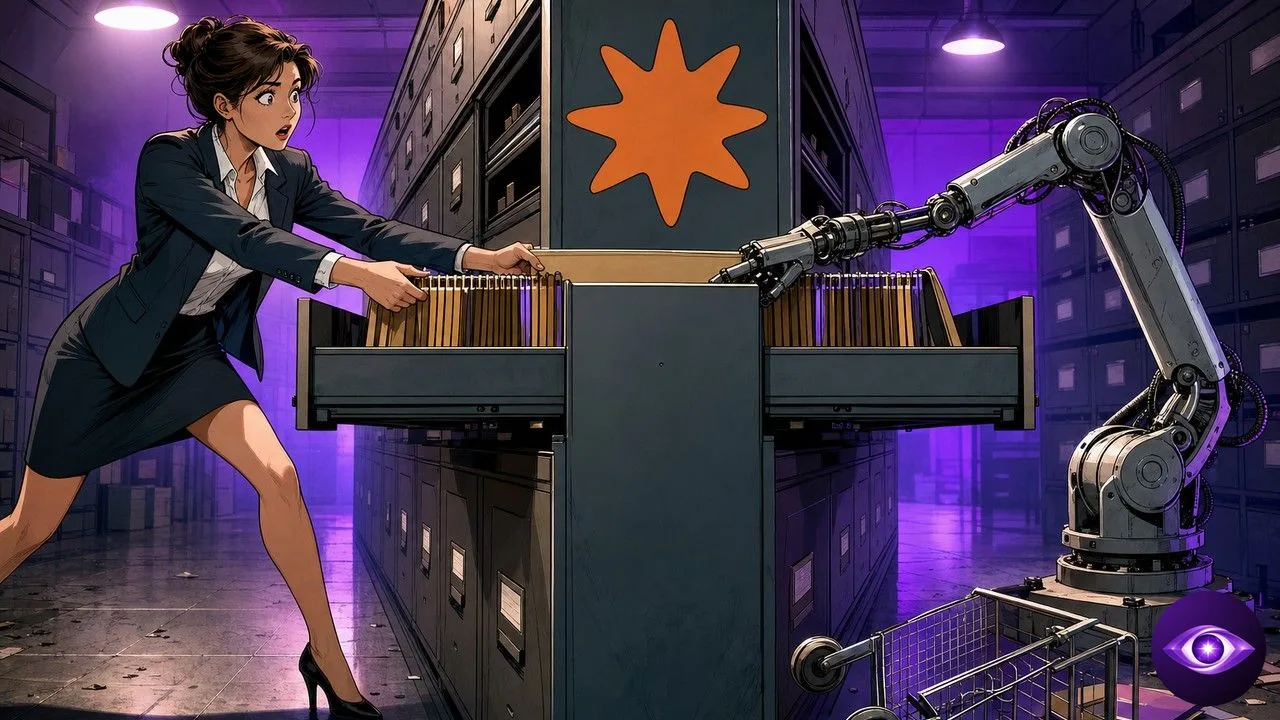
Anthropic has merged Claude’s memory across chat and Cowork, the agent that drives a workstation on the user’s behalf. What the assistant picks up in a conversation is now available when the agent runs a task, and the reverse holds too. The feature reaches free and paid tiers alike, yet stays switched off by default on business accounts.
Key Takeaways
- Chat memory and Cowork memory are now a single store, updated while the conversation is still running.
- Every memory shows up as a topic file the user can read, correct or delete on its own.
- Health, ethnicity, religion, politics and gender identity are excluded by default, and other categories are excluded permanently.
Have an AI Sum Up This Article
ChatGPTOne memory store behind two products
Until this week the two surfaces lived apart. Chat built up context across exchanges while Cowork started cold on every task, which meant describing the same working environment several times a day.
Claude’s Memory now feeds both surfaces without distinction. A task running in the cloud carries whatever Claude retained from chat, and a conversation benefits from what the agent learned while executing, as Anthropic’s own post on how the memory works sets out.
A word on the product itself is worth adding. Cowork is the computer use agent Anthropic shipped at the start of the year, the one that carries a task end to end instead of returning written output, and that does part of its work in the cloud rather than on the user’s own machine.
The example the company leans on is deliberately mundane. Asking the agent to draft an update for your manager assumes knowing who that manager is and how she likes updates written, two facts that until now lived in chat and nowhere else.
The second change is quieter and probably deeper. Claude’s Memory updates during the exchange rather than once a conversation ends, which moves the assistant closer to a colleague taking notes as the meeting goes rather than after it.
Anthropic has been working this ground for a while. The lab explored persistence on the agent side with the Dreaming mechanism that let Claude agents consolidate context between sessions, and pushed it into the workplace with a memory wired straight into Slack threads.

What Anthropic refuses to keep by default
The control layer is more detailed than usual. Each memory takes the shape of a topic file visible in settings, which the user can open, correct or wipe without touching anything else. The whole store can also be paused or reset in one move.
A default exclusion list sits on top. Claude keeps no record of health, race or ethnicity, religious belief, politics or gender identity unless the user explicitly turns on the setting that allows them.
A second list never opens at all. Social security numbers, government issued identity documents, criminal history and immigration status stay out of the store whatever the preferences say, alongside anything that breaches the service’s usage policy.
The user-facing switch has a practical reason to exist. Someone using the assistant to plan meals actually wants dietary restrictions remembered, an item that falls squarely into the health bucket and would otherwise need retyping every week.
That granularity is not a compliance footnote. A memory that flows through an agent able to act on files and applications widens the exposure surface by construction, and Anthropic has documented enough of its own agents getting in each other’s way on a shared project to know the question is coming.
More articles on Horizon
- Jalapeño Chip Beats Nvidia Systems on Power
- Agent tokens have jumped fourteen times since February
- Wan 3.0 Builds Thirty Seconds of Video From a PDF
The real trade-off sits on business accounts
Availability splits the user base in two. Free, Pro and Max get the feature on web, desktop and mobile, while Team and Enterprise leave it in the hands of administrators, off by default for individual users.
That default says plenty. Consumers gain immediate convenience, companies gain one more governance decision to process, and the version of the feature that matters most professionally is the one that will take longest to switch on.
Which is exactly where the usage now sits. Anthropic conceded a few weeks ago that Claude handles more office work than code these days, and persistent memory is precisely what repetitive office tasks were missing.
Reliability stays the open variable. The lab itself showed that three agents running in parallel ended up blocking one another, and a context shared across surfaces multiplies the chances of propagating a wrong fact rather than correcting it.
Rollout also asks something of mobile users, where the feature expects the latest build of the app. Nothing blocking, though part of the install base will run the old behaviour for weeks, which will muddy the first wave of usage feedback.
On the competitive side, this quietly becomes table stakes. An assistant that forgets yesterday now reads as unfinished, and vendors selling an agent without continuity of context will have to answer for it in the coming weeks.
Follow the story on Horizon.