

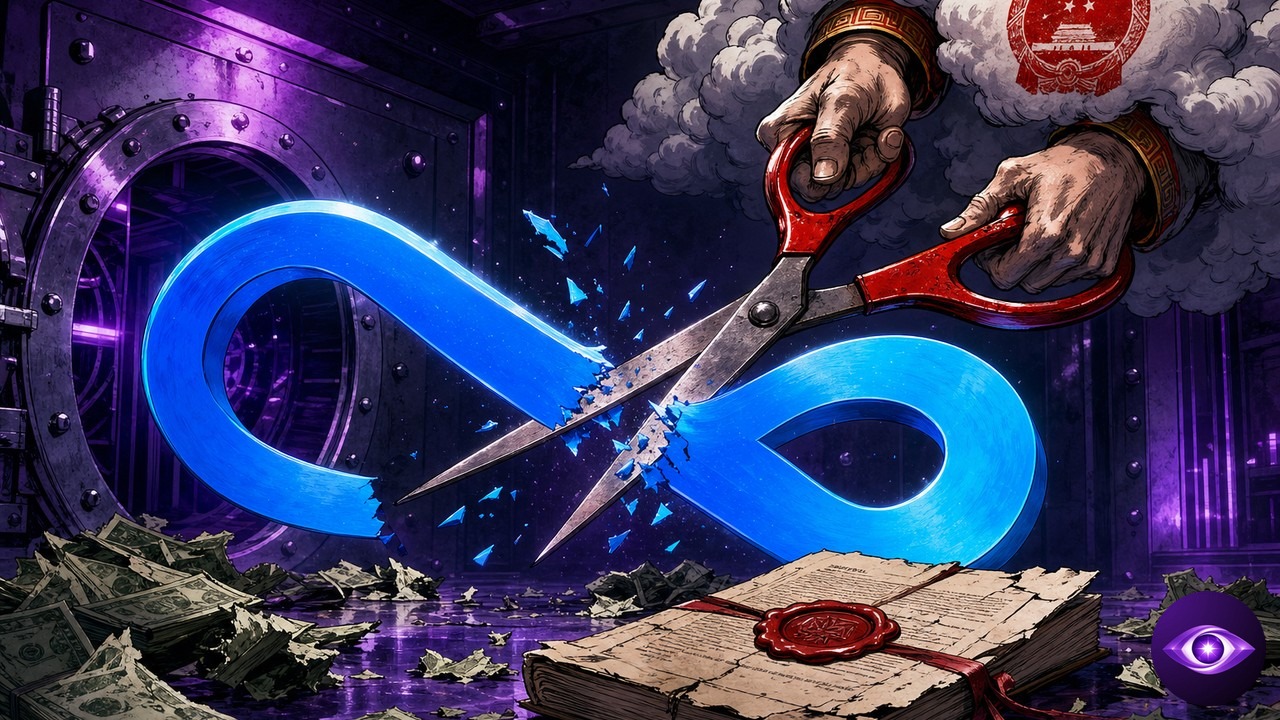
Meta pulls $2B from Manus deal under Beijing pressure. Meta is dismantling Manus, the Chinese AI startup it bought for $2 billion at the end of 2025. Beijing issued a divestiture order two months ago over technology export controls. The co-founders are now raising close to a billion dollars to take back the keys.
Key Takeaways
- Meta has cut all data access and blocked internal use of Manus tools
- The co-founders are raising nearly $1 billion to buy back the company
- Beijing triggered the unwinding in late April 2026 on national security grounds
An acquisition severed by Beijing
Meta has finalized the operational separation from Manus, the AI startup it had paid $2 billion for in December 2025. Shared data access has been cut. Meta engineers no longer have permission to use Manus tooling internally.
The call did not come from Mark Zuckerberg. It was forced by Beijing, which issued a formal divestiture order in late April 2026, roughly two months before today’s effective break. Chinese regulators cited two specific grounds.
First, potential violations of technology export controls. Second, breaches of rules governing foreign investment in sensitive sectors. Beijing publicly hooked the whole package to national security, language that closes off any negotiation.
Manus was founded in China under the parent entity Butterfly Effect. The company had nevertheless been incorporated offshore and relocated part of its team to Singapore in mid-2025. The legal structure was not enough to shield the deal.

A billion dollars to take back control
Manus co-founders did not wait for the dismantling to finish before moving. They have gathered roughly $1 billion from a consortium of existing backers. Benchmark, Tencent, HSG and ZhenFund are leading the table.
The operation aims to buy Meta’s stake back and return control of the startup to its founders. The amount raised is close to half of what Meta paid, which marks a sharp paper discount on the original valuation.
While the deal is being structured, Manus keeps shipping. The startup recently rolled out integrations with Similarweb and Shopify. The product cadence has not been disrupted by the regulatory storm shaking up its cap table.
Republican senator John Cornyn had publicly raised concerns about the acquisition at the time of the announcement, flagging the Chinese ties of the target. Beijing chose to answer with its own block on the Chinese side, a reminder that approvals can vanish without notice, similar to what we saw in our coverage of Meta Reliance’s AI footprint in Asia.
Also on Horizon:
- Applied AI: Meta engineers call the unit a ‘gulag’
- Anthropic survey: 64% of Americans fear AI for their job
- Anthropic pulls Fable 5 and Claude Mythos on US order
What this changes for Meta and the transpacific picture
In the short term, Meta loses a top-dollar tech asset before it could be fully woven into its agent roadmap. The cash hit is partly cushioned by the buyback, but the episode leaves a scar on the credibility of the group’s AI acquisition playbook.
The unwind also lands as Meta tightens the screws on its own AI spending internally. The group just started rationing token budgets for its engineers, a sign that every AI dollar is now being watched by the finance side.
In the medium term, the message to Western investors and operators is clear. Any acquisition of a startup with Chinese roots can be triggered by Beijing regardless of where the target is legally domiciled. Offshore wrappers are no longer a real shield.
The direct consequence will show up in due diligence practices. Funds will need to price in Chinese sovereign risk in the valuation of any AI startup whose founding team or core IP has any anchor in China. That mechanically slows down transpacific deals over the next twelve months.
For Manus, the file opens a second life under founder control. The company gets its independence back, finds an aligned investor base, and can keep pushing its tools without having to coordinate its roadmap with Meta’s. The autonomous agents market keeps one more independent player on the board.
Follow the story on Horizon.