

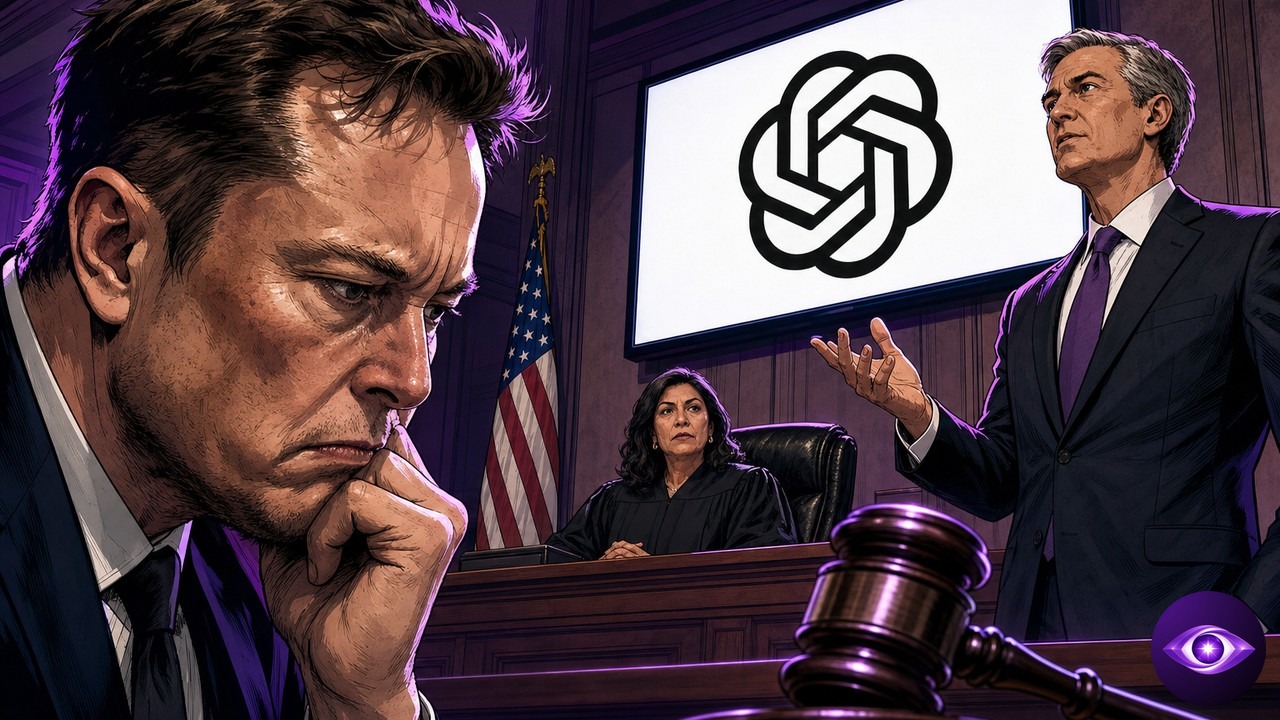
The OpenAI verdict is in: nine California jurors unanimously ruled Elon Musk’s lawsuits against OpenAI, Sam Altman, Greg Brockman, and Microsoft too late on May 18, 2026. All three counts were dismissed on statute of limitations grounds, clearing a major legal obstacle ahead of OpenAI’s anticipated IPO.
Key Takeaways
- All three counts were dismissed unanimously for missing legal filing deadlines
- Claimed damages ranged from $78.8 billion to $135 billion
- Musk’s legal team is preparing an appeal to the Ninth Circuit Court of Appeals
Have an AI Sum Up This Article
ChatGPTA unanimous jury, three counts dismissed
Judge Yvonne Gonzalez Rogers presided over the proceedings. The verdict came on May 18, 2026, following a trial that concluded faster than many observers anticipated. The nine jurors never had to weigh the merits of Musk’s accusations against his former collaborators.
They found unanimously that Musk had waited too long on every count. The first count was barred before August 5, 2021. The second before August 5, 2022. The third before November 14, 2021. In each case, the jury concluded that Musk had access to the information he needed to act well before he filed his claims.
The core of Musk’s case was that the defendants had “stolen a charity” by spinning up a for-profit affiliate from what had begun as a nonprofit AI safety organization. A theory the jury never had to evaluate on its substance, because the statute of limitations closed the door before any of that could be tested.
Judge Gonzalez Rogers acknowledged that “there was a substantial amount of evidence to support the jury’s finding.” She did not dispute the factual claims raised by Musk’s team. She confirmed that the procedural framework simply no longer allowed them to be litigated. The legal calendar did more work than any witness.
As we detailed in our analysis of the trust question at the heart of the trial, the arguments around Sam Altman’s contradictions in his congressional testimony never gained traction at the procedural level. The angle Musk’s legal team chose proved structurally vulnerable from the start. For context, see our earlier piece on Horizon: Elon Musk vs OpenAI: Trust at the Heart of the Verdict.
OpenAI attorney Bill Savitt was unambiguous in his response: “This lawsuit is a hypocritical attempt to sabotage a competitor.” A pointed formulation that reflects how OpenAI has framed Musk’s legal campaign since the first filings in 2023.
The scale of what Musk was seeking matters. Dr. C. Paul Wazzan, Musk’s damages expert, estimated wrongful gains between $78.8 billion and $135 billion. A figure that reflects not just the size of OpenAI’s current valuation, but the argument that Musk’s original contribution was the foundation on which that value was built. The jury never evaluated whether that argument held. It only decided it came too late.

OpenAI clears a hurdle, Musk heads to appeals court
This verdict removes one of the most visible legal uncertainties hanging over OpenAI’s path to a public offering. An IPO is now discussed without this active first-instance litigation in the equation, even if a concrete listing date has not been announced. The full picture is available in OpenAI’s announcement on the court rejecting Elon Musk’s challenge. The road to markets stays bumpy, OpenAI having lost $34 billion before its IPO.
Musk’s legal team announced plans to take the case to the Ninth Circuit Court of Appeals. Proceedings in that court can take years before a panel issues its ruling. This is not an ending. It is a transition to a longer, less visible phase of litigation.
For institutional investors watching OpenAI with IPO ambitions in mind, legal clarity is a concrete factor. An open first-instance case complicated those conversations. The statute of limitations ruling resolves this immediately, even if the appeal keeps residual uncertainty alive at a lower profile level. That path is taking shape, OpenAI filing confidentially with the SEC.
On Musk’s side, a first-instance loss does not signal a strategic retreat. His own AI venture continues to develop commercially and attract talent. The rivalry between the two organizations now plays out on other grounds, products, models, and partnerships, rather than in California courtrooms. The trial had aired deeper risks, an expert warning of an AGI arms race.
The trial did surface governance questions that we covered in depth in our piece on Sam Altman’s testimony. Questions about the transparency of OpenAI’s founding team remain open regardless of the legal outcome of any individual count.
Also on Horizon:
- OpenAI Verdict: Musk Loses, IPO Path Now Clear
- Apple Rebuilds Siri on Gemini and Bets Everything on Privacy
- Elon Musk vs OpenAI: Trust at the Heart of the Verdict
Governance questions the verdict does not resolve
In the short term, the message to OpenAI’s partners and prospective investors is straightforward. The OpenAI verdict removes a formal obstacle that had been complicating ownership structure discussions. The coming weeks will show whether the company converts this legal clearing into visible momentum on that front.
In the medium term, a broader question remains unanswered: at what point can a nonprofit founding organization legitimately pivot to a commercial structure, and under what transparency obligations toward its original contributors? The jury was never asked to answer it. The verdict does not make it go away.
Others in the sector are watching closely. The OpenAI verdict, built on procedural grounds rather than substance, leaves the underlying governance questions unanswered. Multiple AI projects that emerged from hybrid nonprofit-commercial structures will study this precedent carefully.
For OpenAI specifically, the next months will be telling. The company has expanded its partnerships and revenue base significantly over the past year. Clearing this legal hurdle does not resolve the deeper question of whether its governance structure, built for a nonprofit operating like a startup, is fit for the public markets scrutiny that an IPO would bring. That question is not for any California jury to decide.
Regulators in both the United States and Europe are following these cases. The question of who controls the organizations building the world’s most powerful AI systems sits at the center of ongoing regulatory work. A civil lawsuit resolved on limitations grounds does not answer that question, but it has shaped the public debate around it.
Follow the story on Horizon.



Pingback: Sam Altman on the Stand: The Question of Trust - Horizon IA