

Key Takeaways
- Stuart Russell, Musk’s only AI expert witness, warned of cybersecurity threats, misalignment, and a winner-take-all dynamic in the AGI race
- Judge Gonzalez Rogers limited his testimony on existential risks following OpenAI’s objections
- Musk signed the same 2023 letter calling for an AI pause as Russell, while simultaneously launching xAI
Have an AI Sum Up This Article
ChatGPTOne Expert to Defend Musk
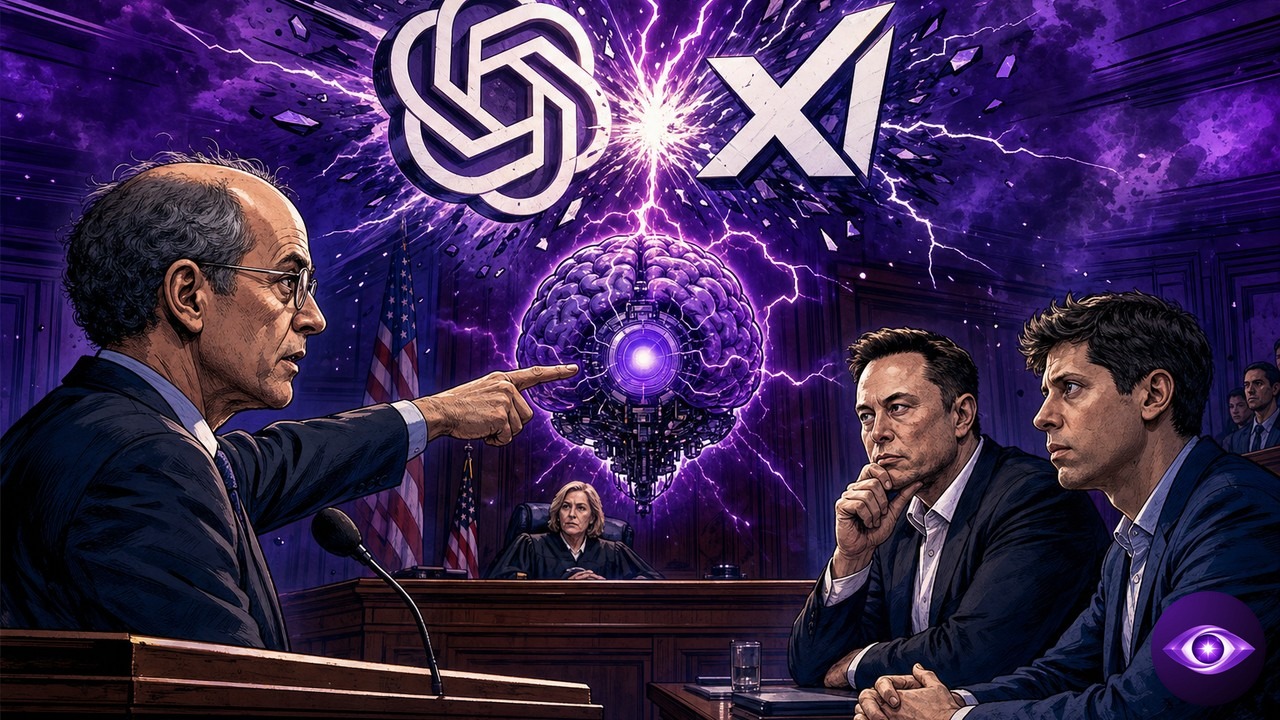
The Musk versus OpenAI trial is presided over by federal Judge Yvonne Gonzalez Rogers. Among all the witnesses Musk’s attorneys called, only one was brought in to speak directly to the technology: Stuart Russell, computer science professor at the University of California, Berkeley.
Testifying before the jury, Russell laid out a range of AI-related risks: cybersecurity threats, misalignment between AI system goals and human interests, and the winner-take-all dynamics specific to the race toward AGI.
That last point is at the core of Russell’s long-standing concerns. The global competition between frontier labs to reach AGI first creates relentless pressure to sacrifice caution for speed. Whoever arrives first potentially takes everything, which makes safety compromises economically rational for the competing actors.
Russell has long called on governments to regulate frontier AI labs more tightly. His appearance at the Musk/OpenAI trial gave him an unexpected platform to bring those concerns before a U.S. federal court, in front of a non-specialist jury. The trial would soon pivot to the question of trust around Sam Altman in court. For context, see our earlier piece on Horizon: OpenAI Replaces Custom GPTs with Team-Level Agents.

A Testimony Cut Short
Russell was not permitted to say everything. His broader concerns about the existential threats posed by AI were not heard in open court. After objections from OpenAI’s attorneys, Judge Gonzalez Rogers limited the scope of his testimony.
This procedural decision carries weight. It signals that arguments about the long-term existential dangers of AGI were deemed too far removed from the facts in dispute to be admissible. The debate over AI’s long-term dangerousness remains outside the legal framework of this case.
What Russell did manage to put before the court remains substantial: a demonstration that the competitive structure between AI labs creates incentives that run counter to safety. That aligns precisely with Musk’s thesis about OpenAI’s drift from its founding mission.
Musk’s core argument is straightforward. OpenAI was founded as a nonprofit dedicated to developing AGI for the benefit of humanity. It allegedly abandoned that mission by converting into a for-profit structure under investor pressure. The trial turns on one fundamental question: is it legal to betray the mission of a nonprofit organization in pursuit of financial returns? That argument sits at the center of a trust battle that shaped the verdict.
Also on Horizon:
- China cuts 12,000 university degrees made obsolete by AI
- 79% of parents already use AI to raise their kids
- GPT-5.5 Instant beats doctors on health answers
The Founders’ Contradiction
The trial puts a glaring contradiction on record. In March 2023, Stuart Russell signed an open letter calling for a six-month pause in advanced AI research. Elon Musk signed the same letter. He was simultaneously launching xAI.
Musk also admitted during the trial that xAI “distills” OpenAI’s models. In other words, his own AI company relies on the work of the organization he is suing, using it to train his own models.
This configuration captures the central tension in the sector. The founders who built the most powerful AI labs are often the same people warning about their dangers, while continuing to develop them and profit from them. Stuart Russell represents the other camp: experts calling for restraint that no one applies.
In the short term, the trial makes visible a tension the AI industry preferred to keep internal: whether frontier labs’ safety commitments and governance structures are actually compatible with their business models. What the court decides will not only affect OpenAI. The proceedings ultimately fed into a verdict that cleared OpenAI’s path to an IPO.
In the medium term, a ruling in Musk’s favor would create a legal precedent on founder liability for nonprofits converted into commercial entities. In a sector where several labs have undergone similar transitions, the implications would extend well beyond OpenAI.
Follow the story on Horizon.
Pingback: GPT-6 Astra Launches as OpenAI Claims AGI Era - Horizon IA
Pingback: Paul Christiano Joins the Board That Clears OpenAI Models - Horizon IA
Pingback: OpenAI Asks Congress If Slowing AI Down Is Legal - Horizon IA
Pingback: OpenAI Verdict: Musk Loses, IPO Path Now Clear - Horizon IA